
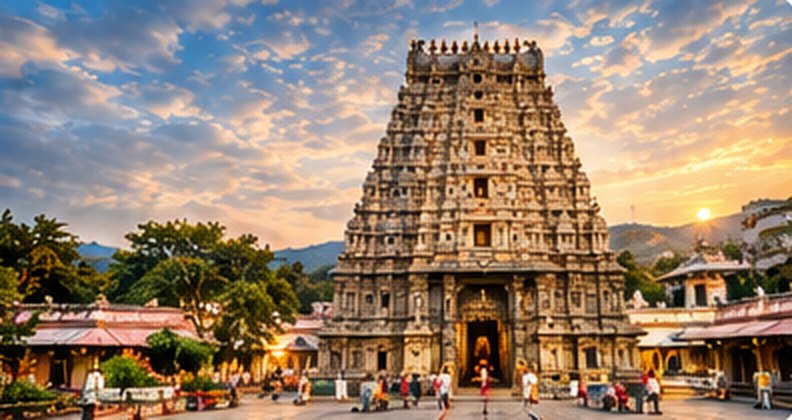
Major celebrations
| Festival | Notes |
|---|---|
| Maha Shivaratri Brahmotsavam | The main festival, usually in February or March, with Rathotsavam, Teppotsavam and Kalyanotsavam |
| Navaratri | Special alankarams for Goddess Gnana Prasunambika, usually in September or October |
| Karthika Masam | A month of special lamp offerings and abhishekams, usually October to November |
| Ugadi | The Telugu new year, usually in March or April |
Dates follow the lunar calendar and change every year. Check the Devasthanam announcements before you plan.
Brahmotsavam programme
The Maha Shivaratri Brahmotsavam follows a set programme. Timings are from the last published schedule and can change.
| Event | Usual time |
|---|---|
| Kannappa Dwajarohanam (flag hoisting) | 4:00 PM |
| Maha Shivaratri | Main festival day |
| Nandi Seva | 9:00 PM |
| Rathotsavam | 10:30 AM |
| Teppotsavam | 7:30 PM |
| Kalyanotsavam | 3:00 AM |
| Pallaki Seva | 8:00 PM |
What Maha Shivaratri means here
Maha Shivaratri is the night devoted to Lord Shiva. At Srikalahasti it is observed with the Brahmotsavam, when the deities are carried in processions and special poojas are held.
Planning for festival days
- Reach early and expect long queues
- Book accommodation well in advance
- Check the temple announcements for revised timings
- Carry water, a shawl and comfortable footwear
- Keep valuables safe in crowds
Festival planner
Filter the main festival seasons below. Dates change every year, so check the temple announcements before you travel.
Major Shiva festival season
Maha Shivaratri
Processions, special worship and large pilgrim interest.
Devi worship season
Navaratri
A devotional period with special celebrations.
Shiva devotional month
Karthika Masam
A popular period for Shiva worship and pilgrimage.
Telugu New Year
Ugadi
A seasonal celebration worth considering when you plan.
Bhakta Kannappa tradition
Kannappa celebrations
Linked with one of Srikalahasti's best-known devotional stories.